 Appointment Line:
  Türkçe
 English
Asthma in Infants and Children
What Is Asthma in Infants and Children?
Asthma in children is a chronic respiratory disease that develops as a result of chronic inflammation of the airways and is characterized by recurrent symptoms such as wheezing, shortness of breath, coughing, and chest tightness. Asthma in infants may most commonly present as recurrent episodes of wheezing.
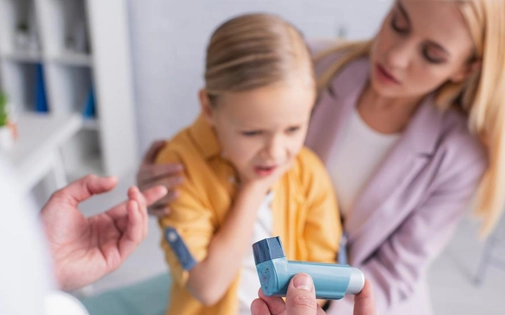
Especially following upper respiratory tract infections such as the common cold caused by viruses, narrowing may develop in the bronchi and smaller airways. In infants, this may present with rapid breathing, wheezing while breathing out, and difficulty breathing. If an infant under the age of three experiences three or more episodes of wheezing, some of these children may continue to have wheezing and shortness of breath at older ages and may be diagnosed with asthma during school age.
Because infants have narrower airways than adults, they are more sensitive to various triggers. Factors such as cold air, respiratory infections, allergens, cigarette smoke, and air pollution may worsen asthma symptoms. During asthma attacks, the airways narrow, mucus production increases, and breathing becomes more difficult.
Early diagnosis and appropriate treatment help bring symptoms under control and support healthy growth and development. Regular medical follow-up, avoiding triggers, and using medications as recommended by the physician are very important in asthma management.
Some infants may experience episodes of wheezing during viral respiratory infections such as the common cold or influenza. These attacks occur when infectious agents cause inflammation in the airways of the lungs and lead to narrowing of the airways.
During wheezing episodes, infants may experience loss of appetite, rapid breathing, coughing, and sometimes fever. In some of these infants, similar episodes of shortness of breath and wheezing continue after the age of three, and asthma may be diagnosed later.
What Causes Asthma in Infants and Children?
Asthma in infants and children does not develop due to a single cause.
Genetic predisposition, an allergic tendency, and environmental factors may all play a role. The risk is particularly higher in children with a family history of asthma or allergic diseases. House dust mites, pollen, mold, cigarette smoke, air pollution, and frequent respiratory infections may also trigger asthma symptoms.
Correctly identifying the factors associated with the development of asthma is important both for planning treatment and for taking preventive measures to reduce asthma attacks.
What Are the Symptoms of Asthma in Infants and Children?
The most common complaint in asthma is coughing. Coughing occurs more frequently at night than during the day and may become more noticeable toward the early morning hours or several hours after falling asleep.
The cough may occur in repeated bouts, and vomiting may sometimes develop after coughing.
A high-pitched wheezing sound coming from the chest may or may not accompany the cough.
If symptoms such as shortness of breath and rapid breathing are also present, the child should be medically evaluated, and emergency assessment may be necessary depending on the severity of the symptoms.
How Can You Recognize an Asthma Cough?
In asthma, coughing may occur both during the day and at night, but it is usually more frequent at night.
It often starts after the child has fallen asleep and may occur in repeated bouts, sometimes waking the child from sleep. Coughing may also occur toward the early morning hours or after waking up.
A high-pitched wheezing sound coming from the chest, especially during exhalation, may accompany the cough.
If the cough stops or improves after an inhaled short-acting bronchodilator such as salbutamol is administered, this may suggest that the cough is related to asthma.
What Is an Asthma Attack?
An asthma attack is a period of exacerbation in which asthma-related symptoms such as coughing and shortness of breath become more frequent and prominent, and narrowing of the airways in the lungs increases.
Because symptoms become more severe during this period, quality of life may deteriorate. Children and adolescents may be unable to attend school, while adults may be unable to continue working because of their symptoms.
During an asthma attack, patients need appropriate treatment, either at home or in the hospital depending on the severity of the attack.
Asthma attacks are commonly triggered by viral respiratory infections, exercise, inhalation of cold air, airborne allergens, exhaust fumes and other air pollutants, strong odors such as perfume, and geographical events such as sandstorms.
What Is Allergic Asthma?
Allergic asthma is a type of asthma in which symptoms are triggered by allergens that are inhaled.
These allergens include house dust mites, grass, weed and tree pollens, mold, cockroaches, and animal-derived allergens such as cat and dog epithelium.
When a person with allergic asthma inhales an allergen to which they are sensitive, inflammation and narrowing develop in the bronchi and smaller airways of the lungs.
As a result, asthma symptoms such as wheezing, shortness of breath, coughing, and chest tightness may develop or existing symptoms may become worse.
Causes of Allergic Asthma
The most important cause of allergic asthma is an excessive immune response to inhaled allergens.
House dust mites, grass, weed and tree pollens, mold, cockroach allergens, and allergens originating from skin flakes (epithelium),saliva, and other secretions of animals such as cats, dogs, and horses are among the most common triggers.
In children and adults with allergic asthma, environmental factors such as cigarette smoke, exercise, cold air, air pollution, desert dust, strong perfume odors, exhaust fumes, and smoke from stoves may also trigger asthma symptoms or worsen existing complaints.
More rarely, in individuals with severe allergies to certain foods such as cow’s milk or lentils, inhaling steam released while these foods are being cooked may trigger an asthma attack.
This is a rare but important condition that may occur particularly in individuals with severe food allergies.
Symptoms of Allergic Asthma in Infants
Symptoms of allergic asthma in infants are most commonly experienced during episodes of wheezing triggered by viral upper respiratory tract infections.
Symptoms may initially include mild nasal discharge, nasal congestion, and mild coughing, followed by more intense coughing, shortness of breath, and rapid breathing.
In infants with food allergies, accidental exposure to and consumption of the allergenic food may also cause wheezing, shortness of breath, and coughing.
Sensitivity to inhaled allergens generally does not develop during infancy. Sensitization to allergens such as house dust mites, pollen, mold, and cat or dog allergens usually develops at older ages.
In infants, the term asthma-bronchitis is used in the same sense as asthma.
Symptoms of Allergic Asthma in Children
Symptoms of allergic asthma in children include shortness of breath, wheezing, and coughing triggered by allergens.
Among inhaled allergens, house dust mites, pollen, and animal allergens such as those from cats and dogs frequently cause allergic asthma symptoms.
As in children with non-allergic asthma, viral infections, exercise, cold air, cigarette smoke, perfume, and stove smoke may also cause coughing, wheezing, and shortness of breath in children with allergic asthma.
In addition, children with food allergies may develop shortness of breath, wheezing, and coughing similar to an asthma attack within minutes after consuming the allergenic food.
People with bee venom allergy may also develop shortness of breath resembling an asthma attack after a bee sting.
Symptoms Triggered by Allergens
- Shortness of breath
- Wheezing
- Persistent or recurrent cough
- Chest tightness
Common Allergens
- House dust mites
- Pollen
- Animal allergens from cats, dogs, and other pets
Factors That Can Trigger Symptoms as in Non-Allergic Asthma
- Viral infections
- Exercise
- Cold air
- Cigarette smoke
- Perfume
- Sources of air pollution such as stove smoke
Symptoms Associated with Food Allergies
- Shortness of breath
- Wheezing
- Coughing
Is Asthma Dangerous in Infants and Children?
Asthma in infants and children can become dangerous if it is not properly monitored and treated.
Delayed diagnosis, recurrent attacks of shortness of breath and coughing, frequent visits to the emergency department, and lack of regular follow-up by a physician experienced in this field may make the disease more difficult to control.
Failure to start controller treatment when needed or irregular use of prescribed treatment may also increase the risk of severe asthma attacks.
Shortness of breath and coughing during an asthma attack are important signs of narrowing of the airways.
If airway narrowing becomes severe, an insufficient amount of air may reach the lungs and the amount of oxygen available to the body may decrease.
Very severe asthma attacks may cause changes in consciousness, and some patients may require intensive care treatment.
For this reason, severe asthma attacks are serious conditions that may be life-threatening.
Exposure to allergens may also trigger asthma attacks in children with allergic asthma.
More severe asthma attacks may develop, particularly in children who do not regularly use their controller medication or who do not begin attack treatment promptly.
Therefore, avoiding allergens and following the prescribed treatment plan regularly are very important.
In children with food allergies, exposure to the responsible food may sometimes trigger asthma symptoms or worsen an existing attack.
For this reason, children with food allergies should avoid the allergenic foods and should be followed according to their physician’s recommendations.
How Can You Tell If a Child Has Asthma?
Whether a child may have asthma can initially be suspected based on the symptoms they experience.
Nighttime coughing, repeated coughing attacks, and waking from sleep because of coughing may be associated with asthma and allergic diseases.
Wheezing and shortness of breath may also accompany coughing attacks in asthma.
In children, these attacks often occur together with upper respiratory tract infections such as the common cold or influenza.
If shortness of breath is prominent, physicians may prescribe inhaled bronchodilator medication.
When children repeatedly require these medications during different attacks, a diagnosis of asthma may be considered.
If your child has symptoms of this type, asthma may be suspected. In such cases, the child should be evaluated by a pediatric allergy specialist.
The definitive diagnosis is made by the physician, who will then provide the necessary recommendations and begin appropriate treatment.
Treatment of Asthma in Infants and Children
The main goals of asthma treatment in infants and children are to control symptoms, prevent attacks, and allow the child to continue daily life in a healthy way.
However, establishing the correct diagnosis before beginning treatment is very important.
One of the common symptoms of asthma is recurrent coughing that begins particularly at night.
Coughing attacks that begin after the child falls asleep may be severe enough to wake the child, and some children may vomit because of intense coughing.
Coughing that continues toward the early morning hours or immediately after waking should also be evaluated in terms of asthma.
The cough may be accompanied by high-pitched wheezing, shortness of breath, and rapid breathing.
However, these symptoms are not specific to asthma and may also occur in other respiratory diseases.
Therefore, children should be evaluated in detail by a physician experienced in pediatric allergy and immunology.
A comprehensive clinical assessment should be performed before a treatment plan is created.
In addition to physical examination, the child’s allergic predisposition is evaluated.
When necessary, blood tests or skin allergy tests may be used to assess allergen sensitivity and identify factors that may influence treatment.
The immune system should also be examined in detail in children with recurrent severe respiratory infections.
Other conditions that may cause chronic lung disease should also be considered.
In children aged five years and older, pulmonary function testing may be performed to assess the response to bronchodilator medication.
A positive bronchodilator response is one of the important findings supporting a diagnosis of asthma.
However, reliable results require the child to be able to cooperate properly with the test.
Once the diagnosis has been confirmed and symptoms are found to be inadequately controlled, treatment is started.
The first-choice controller medications for asthma in children are inhaled corticosteroids.
Depending on the severity of the disease, combination treatments containing long-acting beta-2 agonists may also be used when necessary.
The medications and doses are determined by the physician according to the child’s age, severity of the disease, and response to treatment.
Asthma treatment in children is planned according to a stepwise treatment approach based on international guidelines.
During treatment, patients are followed at regular intervals to evaluate both the effectiveness of the medication and the possibility of alternative diagnoses.
In addition to preventive treatment, families should be informed in detail about rescue medications to be used during an asthma attack.
Recognizing the signs of an attack early and applying the appropriate treatment promptly make an important contribution to successful asthma control.
Frequently Asked Questions About Asthma in Infants and Children
What Helps a Child with Asthma?
A child with asthma should first be examined and evaluated by a pediatric allergy specialist.
Whether the child has an allergy is determined according to the child’s clinical characteristics, medical history, examination findings, and test results.
Symptoms triggered by allergens may improve significantly when appropriate allergen avoidance measures and general preventive measures are implemented.
If necessary, medication may also be started by the allergy specialist.
These approaches help children with asthma.
Does Childhood Asthma Go Away?
Childhood asthma may not disappear completely, but a child may experience long periods without any symptoms.
If no allergy is identified in tests performed when symptoms first develop, the child may be more likely to remain symptom-free in later years.
However, symptoms may reappear during adolescence.
It is important that the child remain under regular follow-up during periods of frequent attacks and during later episodes, with pulmonary function tests performed periodically to monitor lung function.
A person who is diagnosed with asthma during childhood may not necessarily need to use medication regularly later in life.
These situations become clearer during follow-up by an allergy specialist.
The important point is that the child or adolescent should be evaluated by an allergy specialist whenever symptoms occur.
How Is Allergic Asthma Treated in Infants and Children?
Treatment of allergic asthma in infants and children is individualized according to the severity of the disease, the child’s age, and the triggers responsible for the allergy.
The aim of treatment is not only to control attacks but also to prevent new attacks by controlling inflammation in the airways.
Regular controller medications, rescue medications when necessary, and lifestyle measures to reduce exposure to allergens are used together.
With regular medical follow-up, the treatment plan can be updated according to the child’s needs, allowing the disease to remain successfully controlled over the long term.
When Does Childhood Asthma Go Away?
Many studies have examined when childhood asthma may resolve.
The first signs of childhood asthma may begin in infancy with recurrent wheezing episodes.
These wheezing attacks may develop during viral upper respiratory tract infections such as the common cold and influenza and result from inflammation and narrowing of the airways in the lungs.
In some infants who experience these wheezing episodes, shortness of breath and wheezing do not continue after the age of three and may disappear.
However, particularly in children whose mother or father has asthma, atopic dermatitis, or allergic rhinitis, and in children whose allergy tests show sensitization to inhaled allergens, wheezing attacks may continue in later years with episodes of coughing and shortness of breath. In such cases, asthma may develop.
The frequency of upper respiratory tract infections decreases as children grow older, and therefore wheezing episodes associated with these infections also become less frequent.
In infants and children who do not have sensitization to inhaled allergens on skin testing, if symptoms are no longer present after the age of 5–6 years, asthma-related symptoms may have resolved.
What Triggers Asthma?
Factors that may trigger asthma include exercise; viral infections such as the common cold and influenza; house dust mites; different types of pollen; allergens such as cat and dog allergens and various types of mold; cigarette smoke; cold air; chemicals that contribute to air pollution; exhaust fumes; smoke from stoves; perfume; strong detergent odors; chemicals contained in household cleaning products; and chemicals found in laundry and surface bleaching products.
Patients should avoid these types of odors, cigarette smoke, air pollution, and chemical irritants.
Children and adolescents with asthma should be evaluated by a pediatric allergy specialist.
If allergy testing identifies specific allergens, the child and family should be educated about measures to reduce exposure to those allergens as well as general preventive measures.
Following these recommendations can be beneficial.
Does Asthma Go Away in Children?
In children with asthma, inflammation in the walls of the bronchi and smaller airways of the lungs may continue even during periods without symptoms.
Studies have shown that this inflammatory process may persist at a mild level even in patients who have no complaints.
For this reason, childhood asthma may not completely disappear, although patients may remain entirely symptom-free and their pulmonary function may stay within normal limits.
If respiratory allergies are identified on allergy testing, asthma symptoms such as coughing, shortness of breath, wheezing, or nighttime coughing may recur later when the person is exposed to those allergens or other triggers.
As the child grows older, exposure to allergens may also cause symptoms associated with allergic rhinitis or eye allergies.
If no allergy is identified, the likelihood of not experiencing asthma-related symptoms later may be higher.
At What Age Does Allergic Asthma Go Away?
Allergic asthma may improve over the years, particularly if the patient avoids exposure to allergens and does not experience respiratory infections that trigger attacks. During periods without symptoms, the disease may appear to have resolved.
Non-allergic asthma has a higher likelihood of improving during adolescence.
As children with allergic asthma grow older, they may also experience symptoms of allergic rhinitis, such as runny nose, sneezing, and nasal congestion, when exposed to allergens.
In a significant proportion of adults who experience asthma symptoms, these symptoms first began during childhood.
