 Appointment Line:
  Türkçe
 English
What Should You Do About a Persistent Cough in Children?
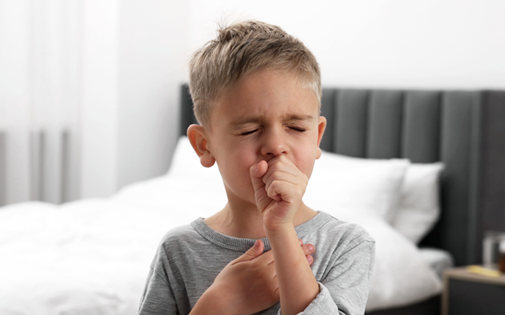
Persistent Cough in Children
Cough is very common in children. Especially children who attend daycare or school may experience several respiratory infections throughout the year, and the cough may persist for some time after each infection. Therefore, not every cough lasting a few days necessarily indicates a serious illness.
However, if your child’s cough has persisted for weeks, interrupts sleep at night, becomes worse while running or playing, sounds wet or productive, or keeps recurring at certain intervals, it should no longer simply be considered a cold that will eventually resolve on its own.
In children, a daily cough that lasts longer than 4 weeks is considered chronic cough. In such cases, the goal is not simply to stop the cough but to determine why it is persisting. The information discussed here does not refer to acute cough, which lasts less than 4 weeks and is usually associated with upper or lower respiratory tract infections.
This is because a persistent cough in childhood may have many causes, ranging from post-infectious airway sensitivity to asthma, protracted bacterial bronchitis, or other respiratory conditions.
Why Is My Child’s Cough Not Going Away?
This is one of the questions I hear most frequently from families who consult me because of a persistent cough.
I would particularly like to emphasize one point: A persistent cough is not a disease on its own. Cough can be a common symptom of many different conditions.
Possible causes of persistent cough in children include:
- cough continuing after a previous infection,
- asthma and airway hyperresponsiveness,
- allergic rhinitis and upper respiratory tract problems,
- protracted bacterial bronchitis,
- cigarette smoke and environmental irritants,
- foreign body aspiration,
- certain respiratory infections,
- less commonly, conditions associated with reflux,
- structural or chronic respiratory diseases.
For this reason, the characteristics of the cough are just as important as how long it has been present.
How Long Can a Cough Normally Last in Children?
After an upper respiratory tract infection, we do not always expect the cough to disappear completely within a few days. Airway sensitivity may persist for some time following a viral infection, and the child may continue coughing even though they otherwise appear to have recovered.
However, when a cough lasts longer than 4 weeks, particularly when it occurs almost every day, the child should be evaluated for chronic cough.
At the same time, duration alone is not enough. If the cough is accompanied by shortness of breath, wheezing, recurrent fever, weight loss, or deterioration in the child’s overall condition, it would not be appropriate to wait until four weeks have passed.
If Your Child Has Been Coughing for Weeks, These Are the First Things I Look At
When a parent tells me, “Doctor, my child’s cough just won’t go away,” I do not simply ask how many days the cough has been present.
How the cough started and under which circumstances it becomes worse can provide us with very important clues.
Is the cough dry or wet?
Even if a child cannot cough up phlegm, the sound of the cough or the presence of secretions in the chest may indicate that it is a wet cough.
Does it get worse at night?
A cough that becomes more noticeable at night or toward the early morning hours may be an important sign of airway sensitivity in some children.
Does it increase while running, laughing, or crying?
Cough triggered by exercise or intense activity may be one of the signs of airway hyperresponsiveness.
Does the child have a runny nose, sneezing, or an itchy nose?
These symptoms may require evaluation of the upper respiratory tract and possible allergic conditions.
Did the cough begin suddenly?
Particularly in young children, a cough that suddenly begins while eating or playing with a small object should always raise the possibility of foreign body aspiration.
Has the child experienced similar episodes of coughing before?
Recurrent episodes of coughing may provide important clues about the underlying cause.
For me, all of this information is far more valuable than simply knowing that “the child has a cough.”
What Causes a Persistent Dry Cough in Children?
A dry cough does not produce an obvious sound of phlegm or secretions. Persistent airway sensitivity after a viral infection is one of the common causes of prolonged dry cough in children.
Asthma, certain allergic conditions, and environmental irritants may also cause a dry cough.
Irritants such as cigarette and electronic cigarette smoke, strong perfumes, air fresheners, aerosolized cleaning products, and smoke from stoves or fireplaces may significantly worsen coughing in some children.
The important point here is not to diagnose asthma or allergy solely because the child has a dry cough. The cough should be evaluated together with other symptoms and physical examination findings.
Why Is a Persistent Wet or Productive Cough in Children Important?
I particularly encourage families to take a wet cough that occurs every day seriously.
Young children often cannot spit out phlegm and instead swallow it. Therefore, the fact that parents do not see phlegm does not necessarily mean that the cough is dry.
One possible cause of a persistent wet cough lasting longer than four weeks is protracted bacterial bronchitis. Recurrent infections and certain chronic respiratory diseases may also need to be considered.
For this reason, a wet cough that has been present for weeks should not simply be approached with the idea that an expectorant will make it go away.
What Causes Nighttime Cough in Children?
Some children may appear perfectly well during the day but begin coughing after going to bed.
Nighttime coughing may occur due to several different causes, including:
- airway sensitivity,
- asthma,
- nasal congestion,
- allergic rhinitis,
- persistent sensitivity following an infection,
- allergens or irritants in the bedroom.
However, asthma cannot be diagnosed simply because a child coughs at night. It is also important to assess whether the child has wheezing, shortness of breath, symptoms triggered by exercise, or recurrent similar episodes.
Can a Persistent Cough Be a Sign of Asthma?
Yes. In some children, a prolonged or recurrent cough may be one of the signs of asthma. However, not every chronic cough is caused by asthma.
A more detailed evaluation of the airways may be necessary if the child has symptoms such as:
- coughing while running,
- increased coughing while laughing or crying,
- coughing in cold air,
- recurrent coughing at night or early in the morning,
- wheezing,
- intermittent shortness of breath.
Asthma is not diagnosed based on the presence of cough alone. The child’s medical history, physical examination, and, when age-appropriate, pulmonary function tests are evaluated together.
Can Allergies Cause a Persistent Cough in Children?
There may be an association between allergic diseases and cough, but it is not appropriate to label every prolonged cough as an “allergic cough.”
If a child has nasal congestion, frequent sneezing, itching of the nose or eyes, or symptoms that become worse during certain seasons or in particular environments, evaluation for allergic conditions may be necessary.
Another important point is that finding sensitization on an allergy test does not, by itself, prove that a particular allergen is causing the child’s cough.
Allergy test results must always be interpreted together with the child’s symptoms and clinical findings.
My Child Recovered from the Illness but the Cough Has Not Gone Away. Is This Normal?
This is quite common in children.
The child’s fever may resolve, the runny nose may improve, and their energy levels may return completely to normal, yet the cough may continue for some time. This may be due to persistent airway sensitivity following the infection.
If the child:
- is generally well,
- is breathing comfortably,
- does not have a fever,
- is eating normally,
- can continue normal daily activities,
- and the cough is gradually improving,
the child may be monitored for a period of time.
However, if the cough becomes worse instead of improving, lasts longer than four weeks, or new symptoms develop, the child should be re-evaluated.
Can a Persistent Cough in Children Be Caused by Reflux?
Reflux may occur together with cough in some children, but it is not appropriate to attribute every persistent cough to reflux.
Particularly in a child who has no other symptoms of reflux, starting acid-suppressing treatment solely because of a cough is not an appropriate approach.
Depending on the child’s age, if additional symptoms such as recurrent regurgitation of stomach contents into the mouth, heartburn, abdominal pain, or stomach discomfort are present, the child may also need to be evaluated for reflux.
Foreign Body Aspiration Should Be Considered in a Sudden and Persistent Cough
Especially in young children, a cough that begins suddenly is particularly important to me.
If a child suddenly begins coughing severely while eating, consuming nuts, or playing with a small toy part, the possibility that a foreign object has entered the airway should be considered.
Sometimes, after the initial severe coughing episode has passed, the child may appear to improve. However, the foreign body may still remain in the airway and can cause persistent coughing, wheezing, or recurrent infections in the following days.
For this reason, a cough that starts suddenly and persists in a young child who previously had no respiratory symptoms should be evaluated carefully.
My Child Is Coughing: What Can I Do at Home?
My first recommendation to families is that, rather than immediately trying to suppress the cough, they should reduce factors that may be making the cough worse.
The following measures can be taken at home:
- Keep the child completely away from cigarette and electronic cigarette smoke.
- Avoid strong perfumes, air fresheners, incense, and aerosol products.
- Make sure the child drinks an adequate amount of fluids.
- If nasal congestion is present, support appropriate nasal cleansing according to the child’s age.
- Do not keep the room excessively warm or poorly ventilated.
- Observe the times of day and situations in which the cough becomes worse.
- Make note of whether the cough is associated with exercise, sleep, cold air, or particular environments.
In children older than one year, honey may help relieve symptoms, particularly nighttime coughing, in some cases of acute cough. However, honey should never be given to babies younger than 1 year because of the risk of botulism.
It should also be remembered that none of these measures treats the underlying cause of a persistent cough.
Are Antibiotics Necessary for a Persistent Cough?
The fact that a cough has lasted for a long time does not, by itself, mean that antibiotics are necessary.
Antibiotics are not beneficial for cough caused by post-viral airway sensitivity, asthma, or environmental factors.
However, antibiotic treatment may be necessary in certain conditions, such as protracted bacterial bronchitis.
The important distinction is this: Antibiotics should be prescribed not simply because “the cough has lasted a long time,” but because a bacterial cause is suspected.
It is also not appropriate to reuse antibiotics left over at home from a previous illness.
Should Cough Syrup Be Used in Children?
Completely suppressing a child’s cough is not always the right goal. Cough is a natural defense mechanism that helps clear secretions and foreign material from the respiratory tract.
I do not recommend the indiscriminate use of over-the-counter cough and cold medications, particularly in young children.
For a child who has been coughing for weeks, the main question should be:
Not “Which cough syrup should we give?” but “Why is this child still coughing?”
What Tests Are Performed for Persistent Cough in Children?
The same tests are not required for every child with a persistent cough.
First, the child’s medical history is assessed in detail and a physical examination is performed. Further investigations are then selected according to the characteristics of the cough and any accompanying findings.
When necessary, investigations may include:
- chest X-ray,
- pulmonary function tests,
- assessment of bronchodilator response,
- allergy tests,
- certain laboratory tests,
- advanced imaging techniques,
- bronchoscopy.
The goal is not to perform as many tests as possible, but to select the appropriate tests based on the possible causes that could explain the child’s cough.
Which Symptoms Are Important in Children with a Persistent Cough?
Some symptoms accompanying a persistent cough are particularly important to us.
Medical evaluation should not be delayed if your child has:
- significant shortness of breath,
- rapid or difficult breathing,
- bluish discoloration of the lips or face,
- coughing up blood,
- chest pain,
- persistent or recurrent fever,
- weight loss,
- poor growth,
- recurrent pneumonia,
- frequent coughing or choking while eating,
- abnormal sounds during breathing,
- marked fatigue or deterioration in general condition.
Emergency evaluation is particularly necessary if the child is having severe difficulty breathing, develops bluish discoloration, or their general condition rapidly worsens.
My Child Keeps Coughing. When Should I See a Doctor?
If your child’s cough gradually improves following an infection lasting a few days, there is usually no need to be concerned.
However, if the cough has continued for more than 4 weeks, particularly if it occurs almost every day, I recommend having the child evaluated.
There are also certain situations in which you should not wait for four weeks.
Earlier evaluation is necessary if the child is having difficulty breathing, has wheezing, the cough began suddenly, there is a persistent wet cough, recurrent fever is present, or there is a noticeable change in the child’s general condition.
The most important message I would like to give families is this:
We do not simply try to stop the cough; we try to understand why the child is coughing.
Once the underlying cause has been correctly identified, unnecessary use of antibiotics, cough syrups, or other medications can be avoided, and an appropriate management plan can be developed for the child.
Frequently Asked Questions About Persistent Cough in Children
How many weeks of coughing is considered chronic in children?
A cough that occurs almost every day and lasts longer than 4 weeks is considered chronic cough in children.
My child has been coughing for a month. Is this normal?
A daily cough that has persisted for a month should be evaluated. Possible causes range from a prolonged post-infectious cough to airway diseases.
Is nighttime coughing a sign of asthma?
Nighttime coughing may occur in asthma, but nighttime cough alone is not sufficient to diagnose asthma. It should be evaluated together with other symptoms and physical examination findings.
How can you tell if a cough is caused by allergies?
An “allergic cough” is not a definitive diagnosis on its own. Nasal congestion, sneezing, itching, or symptoms that become worse during certain seasons or in particular environments may require evaluation for allergic diseases.
Does my child need antibiotics for a cough?
Not every persistent cough requires antibiotics. Antibiotics should only be used after medical evaluation when a bacterial cause is suspected.
Is a persistent productive cough normal in children?
A daily wet or productive cough lasting longer than four weeks should not be considered normal and should be evaluated to determine the underlying cause.
Will cough syrup stop my child’s cough?
Cough syrup does not eliminate the underlying cause. In a persistent cough, the priority is to determine why the child is coughing.
Could a child who coughs while running have asthma?
Recurrent coughing during or after exercise may be one of the signs of airway hyperresponsiveness. Evaluation may be necessary, particularly if wheezing or shortness of breath is also present.
Is it normal for a child’s cough to continue after an infection?
Yes. After some viral infections, coughing may persist longer than the other symptoms. However, a cough that does not improve, becomes progressively worse, or lasts longer than four weeks should be evaluated.
When is a persistent cough in children dangerous?
Medical evaluation should not be delayed if the cough is accompanied by shortness of breath, bluish discoloration, coughing up blood, recurrent pneumonia, weight loss, poor growth, or a marked deterioration in the child’s general condition.
