 Appointment Line:
  Türkçe
 English
Cough in Children: What Is It, What Helps, and How Is It Treated?
What Is Cough in Children?
Cough in children is actually a natural reflex mechanism that occurs when there is an irritant in the respiratory tract. This irritant may be postnasal drainage or mucus caused by an infection, or it may be a foreign object, such as a small toy part that has accidentally entered the airway. In essence, coughing is a protective mechanism that helps the body remove foreign substances from the respiratory tract.
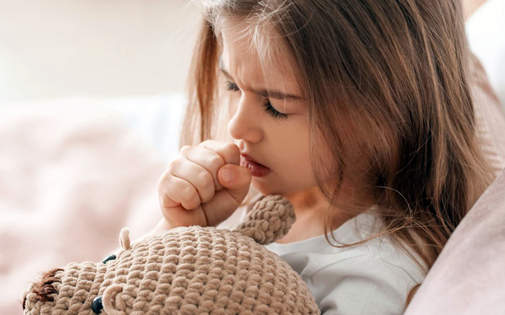
Especially when coughing is severe or prolonged, it can significantly reduce both the child’s and the parents’ quality of life. In such cases, the underlying cause should be identified and appropriately treated.
What Types of Cough Are Seen in Children?
Cough in children may be classified as a wet or productive cough or a dry cough, depending on whether secretions are present in the upper or lower respiratory tract. It may also be classified as acute or chronic, depending on whether it lasts less than or more than four weeks.
Possible causes of dry cough include croup, which is characterized by inflammation around the vocal cords, the early stages of upper respiratory tract infections, allergic reactions, gastroesophageal reflux disease, and asthma-related cough.
Causes of wet or productive cough may include sinusitis, postnasal drip syndrome, lung infections, protracted bacterial bronchitis, bronchiectasis, and chronic lung diseases associated with bronchiectasis.
Wheezing and Cough in Children
Wheezing accompanied by coughing in children may originate from upper respiratory tract conditions involving the nose or from a problem in the lungs.
If nasal congestion is present during an upper respiratory tract infection such as a common cold, influenza, or sinusitis, a coarse wheezing or rattling sound may accompany the cough.
However, if a high-pitched wheezing sound appears to come from the chest and is accompanied by coughing that becomes worse at night and by shortness of breath, this may be associated with asthma.
Children with wheezing and cough should be evaluated by a physician.
Nighttime Cough in Children
Nighttime coughing in children may occur immediately after going to bed or later in the night during deep sleep.
Cough related to postnasal drainage caused by sinusitis or cough associated with reflux may be heard shortly after the child lies down.
If the cough develops several hours after going to sleep or toward the early morning hours, it may be related to asthma. Children with asthma may wake at night because of coughing, experience repeated coughing attacks, shortness of breath, wheezing, or even vomiting triggered by severe coughing.
Daytime Cough in Children
Cough may occur during the daytime as well as at night and can have many different causes.
Cough associated with tic disorders or somatization is generally not present during sleep and occurs only while the child is awake during the day.
High Fever Associated with Cough in Children
High fever in children is most commonly caused by infection. During an infection, fever is usually accompanied by symptoms related to the area of the body affected.
A child who was previously well may suddenly develop symptoms such as a runny nose, fatigue, sore throat, headache, earache, difficulty swallowing, coughing, diarrhea, or vomiting.
If fever is accompanied by neck stiffness or altered consciousness, conditions such as inflammation of the brain or the membranes surrounding the brain (meningitis) may be responsible. In such cases, emergency medical care should be sought without delay.
Although infection is the most common cause of high fever in children, persistent or very high fever may have other causes.
Cough with Fever in Children
Cough with fever in children is most commonly caused by respiratory tract infections.
Cough accompanied by fever in children may occur with sinusitis, influenza, lung infection (pneumonia),or bronchiolitis.
One of the most important findings used to distinguish lower respiratory tract infections involving the lungs from upper respiratory tract infections is whether the child continues to breathe rapidly after the fever has decreased, in other words during periods when the fever is not present.
How Is Cough Treated in Children?
Treatment of cough in children is planned according to the underlying condition after the child’s symptoms and clinical findings have been evaluated in detail.
For example, treatment may consist only of supportive measures in a child with a common cold; bronchodilators and inhaled corticosteroids may be used for asthma; or oral or injectable antibiotics may be required in a child with bacterial pneumonia.
Treatment may also vary in children with underlying conditions such as chronic lung disease or bronchiectasis. Depending on the condition, chest physiotherapy or different types of inhaled treatment targeting respiratory secretions may be used.
When Is Cough in Children Dangerous?
Cough in children may be considered concerning when it is accompanied by symptoms such as high fever or fever lasting longer than three days, shortness of breath, wheezing, rapid breathing, difficulty feeding, marked weakness, bluish discoloration, or coughing up blood.
What Helps with Cough in Children?
What helps with a child’s cough primarily depends on what is causing the cough.
A cough caused by a common cold or another viral upper respiratory tract infection is not treated in the same way as a cough caused by asthma, sinusitis, allergy, or pneumonia. Therefore, particularly when coughing is prolonged or recurrent, the priority should be to identify the cause rather than simply trying to suppress the cough.
I usually explain this to parents in the following way: When your child is coughing, our first goal is not to stop the cough completely. Cough is a protective reflex the body uses to clear the respiratory tract. What matters is understanding why the cough has developed and treating the condition that is causing discomfort.
During a simple upper respiratory tract infection, adequate fluid intake, relieving nasal congestion with saline, keeping the room from becoming excessively hot and dry, and allowing the child to rest may help them feel more comfortable.
Honey may also help reduce nighttime cough in children over one year of age. However, honey should not be given to babies younger than one year.
If the child has nasal congestion and postnasal drainage together with the cough, clearing the nose before bedtime is particularly important. When the child lies down, secretions from the nose and nasopharynx can drain backward and increase coughing.
Simple supportive measures that can be used at home include:
- making sure the child drinks enough fluids,
- using saline if nasal congestion is present,
- keeping the child away from cigarette smoke, strong perfumes, and other respiratory irritants,
- preventing the room from becoming excessively hot and dry,
- allowing the child to rest.
However, none of these measures replaces appropriate treatment for asthma, pneumonia, bronchiolitis, sinusitis, or another underlying disease. If the cause of the cough is different, the treatment should be planned accordingly.
How Does Cough Go Away in Children?
For a cough to resolve, the condition causing the cough must first improve.
A cough caused by a viral infection will often gradually decrease as the infection resolves. In contrast, a cough that continues for weeks, occurs at night, becomes worse during running or playing, or recurs during certain periods may have a different underlying cause.
For example, if the child’s cough is caused by asthma, using cough syrup alone will not resolve the problem. Appropriate asthma treatment needs to be planned.
If the cough is caused by severe postnasal drainage related to sinusitis, the sinusitis should be addressed. If it is associated with reflux, reflux should be evaluated. If a bacterial lung infection is present, the infection itself needs to be treated.
A cough lasting longer than four weeks should not simply be considered a continuation of a common cold.
In these children, it is important to determine when the cough started, whether it occurs during the day or at night, whether it becomes worse with exercise, whether sputum or wheezing is present, and whether the child has experienced similar episodes in the past.
What Stops a Child’s Cough the Fastest?
There is no single method that can eliminate every type of cough in children within a few minutes or hours. This is because cough is not a disease itself; it is a symptom that can occur as a result of many different conditions.
Parents sometimes ask me, “Doctor, isn’t there something that can stop this cough immediately?”
The important point is not simply to suppress the cough but to identify its cause correctly. Especially in conditions such as asthma, bronchiolitis, or pneumonia, a reduction in the sound or frequency of coughing does not necessarily mean that the underlying disease has been treated.
In a simple upper respiratory tract infection, relieving nasal congestion, ensuring adequate fluid intake, and giving honey to children older than one year may help the child feel more comfortable.
However, if the cough is severe, prolonged, or accompanied by other symptoms, the child should be evaluated by a physician.
Which Types of Cough Are Dangerous in Children?
It is important to consider not only how severe the cough is but also the symptoms accompanying it.
Medical evaluation should not be delayed if the child is having difficulty breathing while coughing, is breathing rapidly, has chest retractions, develops bluish discoloration of the lips or face, cannot feed properly, or becomes markedly weak.
Persistent high fever, coughing up blood, sudden severe coughing, suspected foreign body aspiration, or a cough that progressively worsens are also important warning signs.
Particularly in young children, a sudden onset of coughing and shortness of breath while eating or playing with a toy should raise the possibility that a foreign body has entered the airway.
What Can Relieve Cough Quickly at Home?
The aim of measures taken at home should be to make the child more comfortable rather than to completely stop the cough.
In children with nasal congestion, cleaning the nose with saline may sometimes significantly reduce coughing. This is because secretions in the nose and nasopharynx can trigger coughing, especially in younger children.
Warm fluids may help soothe the throat. Honey may help reduce nighttime coughing in children older than one year.
It is also extremely important to ensure that the child is not exposed to cigarette smoke.
However, it is not appropriate to give cough syrups kept at home or medications previously prescribed for another illness every time a child develops a cough.
The use of cough and cold medications in children has important age-related restrictions.
What Should You Do at Home for a Child Who Is Coughing?
The child’s general condition should be assessed first.
If the child is breathing comfortably, can drink fluids, is able to play, and does not have a significant fever, supportive care at home may be sufficient for many uncomplicated respiratory infections.
If the child has nasal congestion, clearing the nose, providing plenty of fluids, and allowing the child to rest are important.
Cleaning the nose before bedtime may help reduce nighttime coughing caused by postnasal drainage.
No one should smoke in the child’s room or living environment. Strong air fresheners, incense, perfumes, and similar products that may irritate the respiratory tract should also be avoided as much as possible.
However, if the cough becomes progressively worse over several days, fever develops, or the child begins to have difficulty breathing, home measures should not be continued as the only approach, and medical evaluation should be sought.
Is There Anything That Stops a Cough Immediately?
There are many recommendations online claiming to “stop a cough instantly.” I recommend that parents approach such claims with caution, particularly when it comes to children.
From a medical perspective, there is no single safe method that instantly stops every type of cough.
Moreover, completely suppressing a cough is not always desirable. In a child with phlegm or significant respiratory secretions, coughing helps clear these secretions from the airways.
Therefore, rather than giving a child cough syrup, herbal products, antibiotics, or other medications without medical advice, it is more appropriate to determine the cause of the cough.
Products marketed as “natural” should also not automatically be assumed to be safe, particularly for young children.
What Should You Do if Your Child Coughs While Sleeping at Night?
The cause of nighttime coughing in children is important.
In children with nasal congestion and postnasal drainage, secretions may flow backward after the child lies down and increase coughing. In such cases, cleaning the nose with saline before bedtime may help the child sleep more comfortably.
For children with significant secretions, offering warm water from time to time may help maintain hydration and reduce the accumulation of secretions.
However, nighttime cough should not always be attributed solely to postnasal drainage.
If the child regularly wakes because of coughing, the cough becomes worse toward the early morning hours, wheezing or shortness of breath is present, or the child also coughs while running during the daytime, evaluation for asthma may be necessary.
For children with recurrent nighttime coughing, I particularly ask parents to observe what time the cough begins, how long it lasts, whether wheezing is present, and whether the child wakes from sleep.
This information can be very valuable in helping us determine the cause of the cough during the medical evaluation.
What Should I Do for a Dry Cough in Children?
A dry cough does not produce phlegm, but it can have many different causes.
Dry coughing may occur at the beginning of a viral infection or continue for some time after the infection has resolved. Asthma, allergic diseases, croup, reflux, and environmental factors that irritate the respiratory tract may also cause a dry cough.
In a child who recently had a cold or influenza and is otherwise in good general condition, a dry cough may persist for some time.
During this period, adequate fluid intake, relieving nasal congestion, and avoiding respiratory irritants such as cigarette smoke may be helpful.
However, if the dry cough becomes worse at night, occurs while running or laughing, recurs in episodes, or is accompanied by wheezing or shortness of breath, evaluation for asthma and allergic diseases may be necessary.
It is also important to investigate the underlying cause of a dry cough that lasts longer than four weeks.
Which Doctor Should I See for a Child’s Cough?
A newly developed cough can initially be evaluated by a pediatrician.
Depending on the duration and characteristics of the cough and any accompanying symptoms, the child may then be referred to an appropriate pediatric subspecialist if necessary.
If the child has a prolonged or recurrent cough accompanied by nighttime coughing, wheezing, shortness of breath, exercise-induced cough, allergic rhinitis, or other allergic symptoms, evaluation by a Pediatric Allergy and Immunology Specialist may be appropriate.
In these children, we do not only ask, “Does the child have an allergy?” We also evaluate the possibility of asthma, the condition of the airways, previous episodes, and, when appropriate, pulmonary function.
However, if the child has significant difficulty breathing, bluish discoloration, or severe respiratory distress, you should not wait for an outpatient appointment and should seek emergency medical care.
Cough Treatment in Children in Istanbul
The first step in treating cough in children is to determine the cause of the cough rather than simply treating the cough itself.
Two children who appear to have similar coughs may actually have completely different underlying conditions. Therefore, treatment should not be planned solely according to whether the cough is dry or productive.
When I evaluate children with cough at my clinic in Istanbul, I first assess how long the cough has been present, whether it occurs during the day or at night, whether it is associated with infections, whether it becomes worse with exercise, and whether wheezing or shortness of breath is also present.
Particularly in children with recurrent coughing episodes, prolonged dry cough, nighttime cough, exercise-induced cough, or coughing accompanied by wheezing, a more detailed evaluation for asthma and allergic respiratory diseases may be necessary.
The same tests are not required for every child.
Depending on the child’s medical history and examination findings, allergy evaluation, pulmonary function testing, or other investigations may be planned when necessary.
Treatment is then individualized according to the findings and the actual cause of the cough.
